Paralegal Technology Glossary
Paralegal Technology Glossary
Hi, my name is Sifa Muyuku, and I am studying Paralegal Technology at Ahuntsic College for about two years. This program is useful for someone who wants to work in a legal profession, but more specifically for someone who aspires to be a paralegal technician or a court bailiff. The term “paralegal” means that we are educated in secondary legal issues, yet not completely certified as an attorney. If you are studying in the same program as me or another law-related program, this glossary is for you. For each word in English, you can find the translation in French, the definition, the pronunciation, an example and if necessary, an image. Thus, you will be able to properly use the words in your work environment. I have been able to find the words on a list of terms related to my field of study and the definitions have been found on the internet. After consulting this glossary, I want you to save it somewhere in your documents and use this vocabulary to properly communicate at work.
- allegation
- noun
- A claim or assertion that someone has done something illegal or wrong, typically one made without proof.
- Example: Hence, when the Nazis, in 1943, unveiled a mass grave of 15,000 Polish officers at Katyn, murdered upon Stalin's orders, he denied all allegation and seized the opportunity to break diplomatic relations with the Polish government-in-exile upon inquiries from President Sikorski.
- en: allégation
- argument
- noun
- A reason or set of reasons given with the aim of persuading others that an action or idea is right or wrong.
- Example: She uses evidence to back up her argument, for example, the fact that archaeologists have found signs of "flint working, planting and grazing washed up to the very edges of the monuments".
- en: argument
- assault
- noun
- Make a physical attack on.
- Example: In this case non-lethal pacifism seems to suggest that it would be immoral to choose one's own life over that of the aggressor, no matter how unjust the assault.
- en: agression
- attorney
- noun
- One who is legally appointed to transact business on another's behalf; especially: lawyer.
- Example: Huntley and Costanzo (2003) asked jurors systematic questions of their interpretations of the evidence after each attorney had presented their case.
- en: avocat
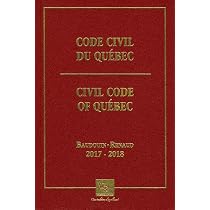
- Civil Code of Quebec
- noun
- The civil code in force in the Province of Quebec, Canada, which came into effect on January 1, 1994.
- Example: The Civil Code of Quebec, in harmony with the Charter of human rights and freedoms and the general principles of law, governs people, relations between people, and property.
- en: Code civil du Québec
- clause
- noun
- A particular and separate article, stipulation, or proviso in a treaty, bill, or contract.
- Example: The inclusion of a clause concerning the creative freedom of the people was mere phraseology designed to disguise the Bolshevik penchant for tight centralization and rigid discipline.
- en: clause
- court
- noun
- A court is a place where legal matters are decided by a judge and jury or by a magistrate.
- Example: In Donoghue v Stevenson, public health considerations and lack of legal remedy has obliged the court to impose a duty.
- en: tribunal

- criminal record
- noun
- A history of being convicted for crime.
- Example: At present, the balance in rape trials is very much in favor of the defendant; his sexual history and past criminal record are protected even if he has attacked the complainant.
- en: casier judiciaire
- doctrine
- noun
- A belief or set of beliefs held and taught by a church, political party, or other group.
- Example: Nevertheless, there are already circumstances in which the courts have to determine the probability of whether an event occurred and hence it seems that more consideration should be given to the fact that at present the doctrine is incapable of dealing with economic duress without undermining the true intentions of the parties.
- en: doctrine
- guilty
- adjective
- Culpable of or responsible for a specified wrongdoing.
- Example: He was found guilty of manslaughter.
- en: coupable
- jurisprudence
- noun
- The theory or philosophy of law.
- Example: The introduction of proportionality demonstrates the impact of European jurisprudence on the role of the domestic judge in ways more subtle and unexpected than expressed in the human rights legislation itself.
- en: jurisprudence
- mediation
- noun
- Intervention in a dispute in order to resolve it; arbitration.
- Example: In divorce cases where there are children, mediation is preferable to going to court.
- en: médiation
- monograph
- noun
- A detailed written study of a single specialized subject or an aspect of it.
- Example: There is not a comprehensive monograph on the Haimon Painter and the 1936 book by Haspels is still being used as the main textbook.
- en: monographie
- plaintiff
- noun
- A person who brings a case against another in a court of law.
- Example: A reform allowing a third party to sue would achieve nothing, or almost nothing, unless there was also a departure from the rule that a plaintiff could not sue on a contract if it has not provided consideration.
- en: plaignant
- probation
- noun
- The release of an offender from detention, subject to a period of good behavior under supervision.
- Example: In Washington, D.C. and Baltimore, Maryland between 40-50% of the black male population between the ages of 18 and 15 is at any given moment either in prison, on probation, parole or there is a warrant out for their arrest.
- en: probation
- recusal
- noun
- The withdrawal of a judge, prosecutor, or juror from a case on the grounds that they are unqualified to perform legal duties because of a possible conflict of interest or lack of impartiality.
- Example: His recusal from the case might be considered a blow to the defendant's chances.
- en: récusation
- revoke
- verb
- Put an end to the validity or operation of (a decree, decision, or promise).
- Example: Laura had no opportunity to revoke the contract even if she were to read the notice inside the bus.
- en: révoquer
- sentence
- noun
- The punishment assigned to a defendant found guilty by a court, or fixed by law for a particular offense.
- Example: These defenses provide important reassurance to practitioners who face a prison sentence of up to 14 years and an unlimited fine.
- en: peine
- testimony
- noun
- A solemn declaration usually made orally by a witness under oath in response to interrogation by a lawyer or authorized public official.
- Example: The court heard two days of testimony from environmental experts, activists, and lawyers.
- en: témoignage
- witness
- noun
- A person who sees an event, typically a crime or accident, take place.
- Example: In Webber, it was held that a defendant relies on a fact when counsel puts an argument to a witness, even if that witness rejects the argument being put forward.
- en: témoin
Comments
Post a Comment